Five Insurance Exposures Convenience Store Owners Should Understand
From slip-and-fall claims to refrigeration failure and employee theft, convenience store owners face a range of insurance exposures. Here are five every owner should know.
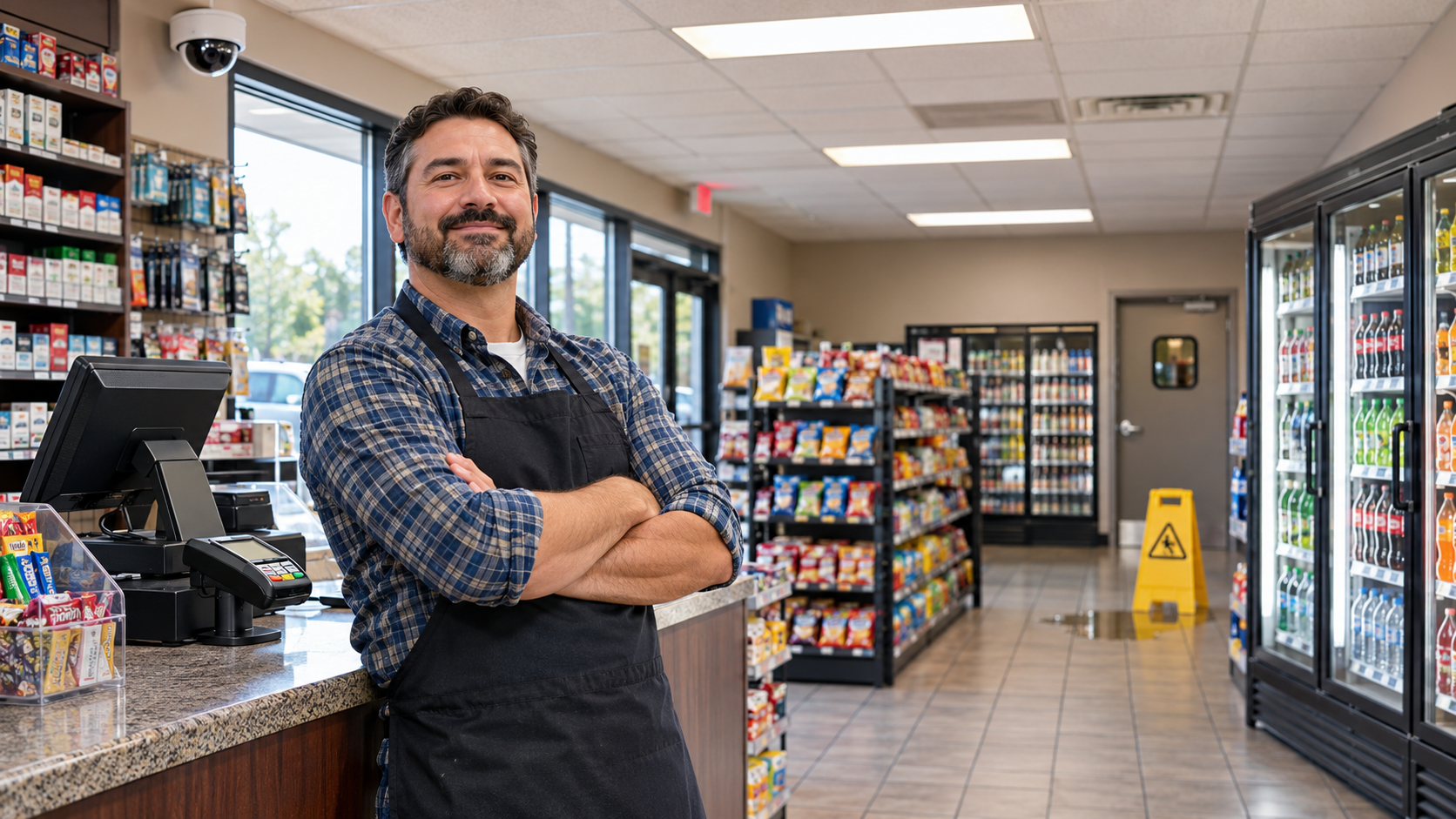
Running a convenience store means managing a high volume of customer traffic, cash transactions, perishable inventory, and equipment that runs around the clock. Whether your store operates independently or includes fuel sales, lottery, or alcohol, the risk profile of a convenience store is more complex than it might appear from the outside.
This article covers five insurance exposures that convenience store owners in Michigan should understand — not to alarm you, but to help you make informed decisions about your commercial insurance program.
1. Premises Liability and Customer Injury Risk
Convenience stores see a steady flow of customers throughout the day and, in many cases, late into the night. That volume of foot traffic creates real premises liability exposure.
Slip-and-fall incidents are among the most common claims for retail businesses. Wet floors near entrances during Michigan winters, spills in the beverage aisle, uneven pavement in the parking lot, or poor lighting near the entrance can all contribute to customer injuries — and potential liability claims against your business.
General liability insurance is typically the foundation of a convenience store insurance program. It can help cover bodily injury claims, property damage caused by your operations, and related legal defense costs. However, coverage terms, limits, and exclusions vary by policy, so it is worth reviewing what your policy actually covers.
If your store has a parking lot, fuel canopy, or outdoor area, those spaces are part of your premises exposure as well. Maintenance and inspection practices matter — but so does having adequate liability coverage in place.
2. Property Damage and Inventory Loss
Convenience stores carry a significant amount of inventory relative to their square footage — beverages, snacks, tobacco products, lottery tickets, and often fuel-related merchandise. A fire, vandalism incident, or weather event can result in substantial property losses in a short period of time.
Property insurance for convenience stores typically covers the building (if you own it), business personal property, fixtures, shelving, signage, and inventory. If you are a tenant, your landlord's policy generally covers the building structure — but your own business personal property and improvements are typically your responsibility.
Michigan weather creates additional property exposures. Roof damage from heavy snow loads, water intrusion from ice dams, and wind damage are all real risks for Michigan retail properties. Review your policy to understand what perils are covered and whether your coverage limits reflect the current replacement cost of your inventory and equipment.
Vandalism and theft are also property exposures worth reviewing. Broken windows, graffiti, and forced entry can result in both property damage and inventory loss.
3. Equipment Breakdown and Refrigeration Exposure
Refrigeration is the backbone of most convenience store operations. Walk-in coolers, reach-in beverage cases, frozen food units, and ice machines run continuously — and when they fail, the financial impact can be significant.
A refrigeration breakdown can result in the loss of an entire cooler's worth of beverages, dairy products, or prepared foods. Depending on the size of your operation, that spoilage loss can run into thousands of dollars. And if the breakdown occurs over a weekend or holiday when service is delayed, the losses can compound.
Equipment breakdown coverage — sometimes called boiler and machinery coverage — addresses mechanical and electrical failure of covered equipment. This is typically a separate coverage from standard commercial property insurance, which generally covers damage from external causes like fire or weather but not internal mechanical failure.
For stores with fuel dispensers, point-of-sale systems, or other specialized equipment, equipment breakdown coverage is worth a careful review. Ask your agent whether your current program includes it and what the coverage limits are.
4. Crime, Theft, and Cash-Handling Exposure
Convenience stores handle cash. That is simply part of the business model — and it creates a crime exposure that deserves attention.
Robbery is a real risk for businesses that operate late hours, maintain visible cash registers, or are located in higher-crime areas. Employee theft — including cash skimming, inventory theft, and fraudulent transactions — is also a significant source of loss for retail businesses. Studies consistently show that employee dishonesty accounts for a meaningful share of retail shrinkage.
Commercial crime coverage can address losses from robbery, burglary, employee theft, and forgery. Coverage is typically written with specific sublimits for different types of crime losses, so it is important to review those limits against your actual cash-on-hand levels and inventory values.
If your store sells lottery tickets, the cash and ticket handling involved adds another layer of exposure. Some stores also accept money orders or offer check cashing, which can increase crime-related risk.
Security measures — cameras, safes, drop procedures, and staffing practices — can help reduce crime exposure, but they do not eliminate it. A commercial crime policy is an important part of a complete convenience store insurance program.
5. Business Interruption After a Covered Loss
Imagine a fire in your store. The property damage is covered — but what about the weeks or months your store is closed while repairs are completed?
Business interruption coverage (also called business income coverage) is designed to replace lost revenue and cover ongoing expenses — rent, utilities, loan payments, and payroll — during a period when your store cannot operate due to a covered loss. Without it, even a fully covered property claim can leave a business owner in a difficult financial position.
For a convenience store, even a short closure can result in significant lost income. Regular customers will find alternatives, and rebuilding that traffic after reopening takes time.
Business interruption coverage is typically tied to a covered property loss — it does not apply to every reason a business might close. The coverage period, waiting period, and limits vary by policy. Review your business income coverage carefully to make sure the limits reflect your actual revenue and that the coverage period is long enough to account for a realistic recovery timeline.
If your store includes fuel sales, the income from fuel operations should be factored into your business income coverage as well.
A Note on Liquor Sales and Extended Hours
Convenience stores that sell alcohol carry an additional exposure: liquor liability. Michigan's Dram Shop Act can hold a business liable for damages caused by a visibly intoxicated person who was served alcohol on the premises. General liability policies typically exclude liquor liability, so a separate endorsement or standalone policy is usually required for stores with a liquor license.
Stores that operate 24 hours or late into the night may also face higher crime and liability exposures than daytime-only operations. These factors can affect both coverage availability and program structure.
Coverage Needs Vary by Operation
No two convenience stores are identical. A small neighborhood store with no fuel sales has a different risk profile than a larger operation with a fuel canopy, a beer cave, and extended hours. Building ownership versus tenancy also affects what coverage is needed.
A commercial insurance review can help identify gaps in your current program before a loss occurs — not after. Renewal time is a natural opportunity to review your coverage, but you do not have to wait until then.
Work with an Independent Insurance Agent
Harborstone Insurance & Risk Solutions LLC is an independent insurance agency serving Michigan businesses, including convenience store owners across Metro Detroit and the surrounding region. We work with business owners to review their coverage needs and help identify practical insurance solutions that fit their operations.
If you would like to discuss your convenience store insurance program, contact us or request a business insurance quote. We are happy to take a closer look at your current coverage and help you understand your options.
This article is provided for general educational purposes only and does not constitute insurance, legal, or financial advice. Coverage availability, terms, conditions, and exclusions vary by policy and insurer. Consult a licensed insurance professional for guidance specific to your situation.


